
A Complete Guide to Industrial HVAC Design & Factory HVAC System Design
Designing a reliable and efficient HVAC system for factories and industrial buildings is far more complex than installing standard air conditioning. Industrial spaces operate with heavy machinery, high heat loads, strict ventilation needs, and continuous operations. A well-planned Industrial HVAC Design ensures optimal productivity, worker comfort, equipment protection, and energy efficiency.
This comprehensive guide explains everything businesses, engineers, and facility managers must know about Factory HVAC System Design, including planning, load calculation, ventilation, refrigeration integration, and long-term maintenance.
Table of Contents
Understanding Industrial HVAC Design
Industrial HVAC Design refers to the planning and implementation of heating, ventilation, air conditioning, and refrigeration systems specifically for factories, warehouses, and industrial environments. Unlike residential or office systems, industrial HVAC must handle:
- High internal heat loads from machinery
- Continuous operations
- Large open spaces
- Dust, fumes, and pollutants
- Process cooling requirements
- Temperature and humidity control
A properly designed HVAC system ensures consistent indoor conditions while maintaining energy efficiency and regulatory compliance.
Why Industrial HVAC Design Matters for Factories
Factories depend heavily on climate control to maintain productivity and extend equipment lifespan. Poor ventilation or inefficient cooling can lead to overheating machinery, reduced worker performance, and increased energy costs.
A professionally planned Industrial HVAC Design offers:
1. Worker Comfort and Safety
Maintaining proper temperature and airflow improves productivity and reduces fatigue. Proper ventilation removes harmful gases, fumes, and dust.
2. Equipment Protection
Many machines generate significant heat. A well-engineered Factory HVAC System Design prevents overheating and extends equipment lifespan.
3. Energy Efficiency
Industrial cooling systems consume large amounts of power. Optimized Industrial HVAC Design can reduce electricity bills by 20–40%.
4. Compliance with Standards
Industries must comply with ventilation and safety standards. Proper Factory HVAC System Design ensures adherence to regulations.
Key Factors in Industrial HVAC Design
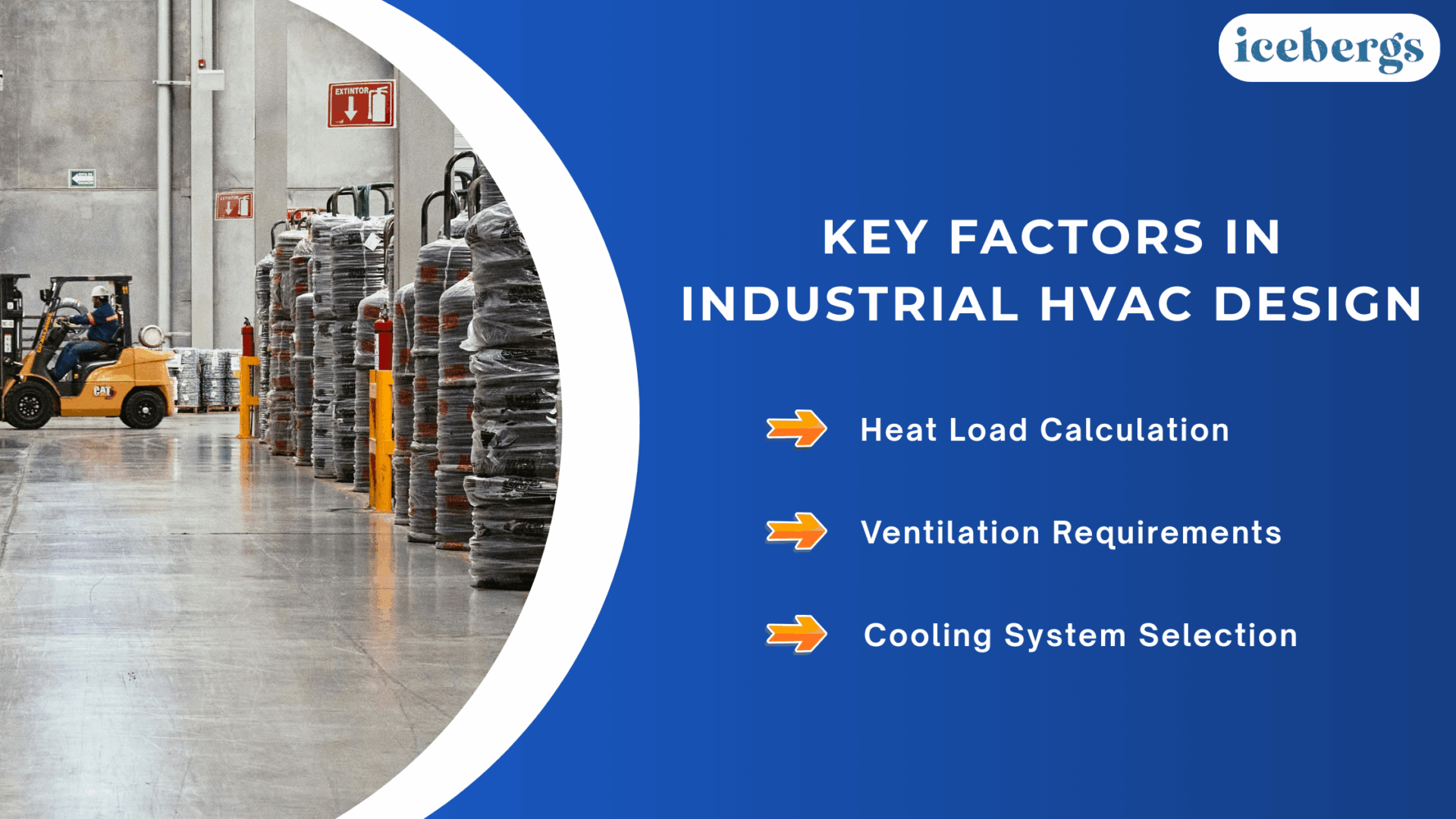
Designing HVAC for industrial buildings requires detailed analysis and engineering expertise. Below are the most critical components of Industrial HVAC Design.
1. Heat Load Calculation
Accurate heat load calculation is the foundation of every Factory HVAC System Design. Engineers evaluate:
- Machine heat output
- Number of workers
- Lighting heat load
- Outdoor temperature
- Building insulation
- Production processes
Improper calculations can result in underpowered or oversized systems, both of which increase operating costs.
2. Ventilation Requirements
Industrial environments often produce dust, fumes, or chemicals. Proper ventilation is essential.
A well-planned Industrial HVAC Design includes:
- Fresh air supply systems
- Exhaust systems
- Air filtration
- Fume extraction
- Dust collection
These elements ensure safe and breathable air quality inside factories.
3. Cooling System Selection
Choosing the right cooling technology is critical in Factory HVAC System Design. Options include:
4. Chiller Systems
Chillers are ideal for large factories and industrial facilities. They provide centralized cooling and high efficiency for continuous operations.
5. VRF/VRV Systems
Variable Refrigerant Flow systems are suitable for medium-sized industrial spaces and office areas within factories.
6. Air Handling Units (AHU)
AHUs distribute conditioned air across large areas and are essential for uniform cooling in industrial buildings.
7. Evaporative Cooling
Evaporative cooling is used in certain industrial environments where energy-efficient cooling is required.
Selecting the right system depends on factory size, heat load, and operational requirements.
Importance of Air Distribution in Factory HVAC System Design
Even the most powerful cooling system will fail without proper air distribution. Effective Industrial HVAC Design ensures uniform airflow across all zones.
Key considerations:
- Duct layout optimization
- Airflow balancing
- High-volume low-speed (HVLS) fans
- Zoned cooling
- Return air systems
A properly engineered HVAC system eliminates hot spots and ensures consistent temperature throughout the facility.
Role of Refrigeration in Industrial HVAC Design
Many industries require integrated refrigeration along with HVAC systems. Industrial refrigeration plays a crucial role in:
- Cold storage facilities
- Process cooling
- Warehouses
- Manufacturing plants
- Pharmaceutical storage
Modern Industrial HVAC Design often combines HVAC and refrigeration systems to maintain precise temperature control for operations. Efficient refrigeration integration improves process stability and energy efficiency.
Energy Efficiency in Industrial HVAC Design
Energy consumption is a major concern in factories. A poorly designed system can significantly increase operational costs.
Energy-efficient Factory HVAC System Design includes:
High-Efficiency Chillers
Modern chillers consume less power while delivering higher cooling output.
Variable Speed Drives (VFD)
VFDs adjust motor speeds based on demand, reducing energy consumption.
Smart Controls & Automation
Advanced automation systems monitor temperature and energy usage, optimizing performance.
Insulated Ducting and Piping
Proper insulation prevents energy loss and improves system efficiency.
Heat Recovery Systems
Heat recovery can reuse waste heat for other processes, enhancing efficiency.
Implementing these strategies during Industrial HVAC Design can lead to significant long-term savings.
Zoning and Customization in Factory HVAC System Design
Every industrial facility has different cooling needs. A one-size-fits-all approach does not work.
Effective Industrial HVAC Design includes zoning based on:
- Production areas
- Storage areas
- Office spaces
- Server rooms
- Loading docks
Each zone can have customized temperature and airflow settings. This approach ensures efficient cooling and reduces unnecessary energy consumption.
Maintenance Planning for Industrial HVAC Systems
Maintenance is a critical part of Factory HVAC System Design. A system that is easy to maintain will perform better and last longer.
Preventive maintenance includes:
- Regular filter cleaning
- Chiller servicing
- Duct inspection
- Refrigerant level checks
- Electrical inspections
A well-maintained Industrial HVAC Design system reduces downtime and prevents costly breakdowns.
Common Challenges in Industrial HVAC Design
Designing HVAC for industrial buildings comes with several challenges:
High Heat Generation
Heavy machinery and continuous production create high heat loads that require robust cooling systems.
Large Open Spaces
Factories often have high ceilings and large floor areas, making uniform cooling difficult.
Air Quality Issues
Dust, fumes, and chemicals require advanced filtration and ventilation.
Energy Costs
Industrial HVAC systems consume significant electricity, making efficiency essential.
Professional Factory HVAC System Design addresses these challenges through advanced engineering and system optimization.
Latest Trends in Industrial HVAC Design
Technology is transforming the way industrial HVAC systems are designed and operated.
Smart HVAC Systems
IoT-enabled systems monitor temperature, humidity, and energy usage in real time.
Energy Monitoring
Advanced monitoring tools help identify inefficiencies and reduce power consumption.
Eco-Friendly Refrigerants
Modern systems use environmentally friendly refrigerants to reduce environmental impact.
Automation and Remote Monitoring
Remote monitoring allows facility managers to control systems from anywhere, improving efficiency.
These innovations are shaping the future of Industrial HVAC Design and making systems more efficient and sustainable.
Choosing the Right HVAC Partner for Industrial Projects
Selecting an experienced HVAC contractor is crucial for successful implementation. A reliable partner ensures proper Factory HVAC System Design, installation, and maintenance.
Look for:
- Experience in industrial projects
- Engineering expertise
- Turnkey capabilities
- Maintenance support
- Energy-efficient solutions
A professional approach to Industrial HVAC Design ensures long-term reliability and performance.
Conclusion
- A well-planned Industrial HVAC Design is essential for efficient factory operations, worker comfort, and equipment protection. From accurate heat load calculations to effective ventilation planning and refrigeration integration, every element plays a key role in long-term system performance and reliability.
- Investing in professional HVAC System Design helps industries reduce energy costs, improve productivity, and maintain safe and controlled working environments with consistent and energy-efficient cooling performance.
- With the right design approach, advanced technology, and proper maintenance strategy, industrial HVAC systems can deliver reliable performance for many years across diverse industrial facilities.
- Whether setting up a new manufacturing facility or upgrading an existing plant, partnering with an experienced team like Icebergs ensures the highest standards in Industrial HVAC Design and execution.
- By focusing on efficient HVAC System Design, Icebergs helps businesses achieve lower operational costs, improved environmental control, and sustainable long-term growth.
.